
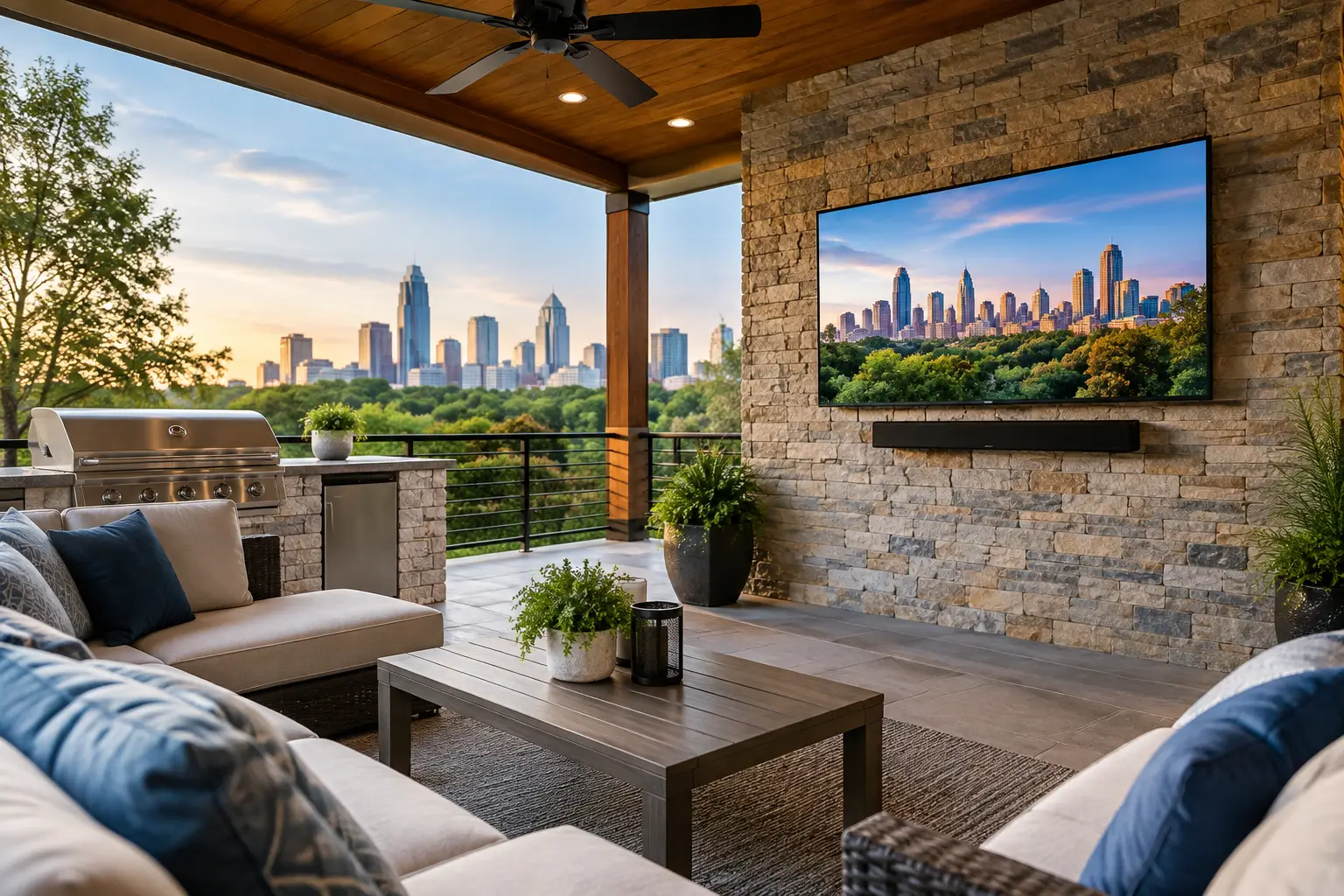
A television on the patio can turn an ordinary Saturday into a place everyone wants to gather. But outdoor TV installation is not simply a matter of hanging a screen near the grill. Atlanta heat, humidity, sudden rain, glare, power requirements, and Wi-Fi range all affect whether the finished setup feels polished or becomes a source of frustration.
The best installations start with a plan for the space, the weather, and the way your family actually uses it. Whether you are building a covered porch, updating a pool house, or adding a screen to a restaurant patio, a clean result comes from making the right decisions before the TV goes on the wall.
Start With the Location, Not the Television
Most homeowners begin by choosing a screen size. A better first step is deciding where the screen can live safely and comfortably. Look at the viewing area from the seats you will use most often. The TV should be high enough to avoid bumps and splashes, but not so high that everyone has to crane their neck during a game or movie.
Sun exposure matters just as much. Even a high-quality screen can be difficult to watch when it faces afternoon sunlight. A covered porch gives you more flexibility, but open-sided patios still receive reflected light from concrete, windows, pools, and light-colored furniture. Before mounting, check the space at the time of day you expect to use it most.
A shaded wall that faces away from direct sun is usually the best choice. If the ideal wall is not available, a full-motion mount can help angle the picture toward the seating area and away from glare. The trade-off is that articulating mounts require the right wall structure and must be rated for the television’s size and weight.
Choose Equipment Built for Outdoor Conditions
An outdoor-rated TV is designed for changing temperatures, moisture, dust, and brighter viewing conditions. It is the preferred option for uncovered patios, pool areas, and locations that receive wind-driven rain. These models also provide a brighter picture than most indoor TVs, which makes a real difference in daylight.
An indoor television may be reasonable for a fully enclosed sunroom or a deeply covered porch that stays dry year-round. Even then, it is not the same as an outdoor-rated display. Humidity, insects, temperature swings, and condensation can shorten its lifespan. Homeowners who choose an indoor TV for a protected location should understand that they are accepting more risk and may have limited manufacturer warranty coverage for that environment.
The enclosure is another decision that deserves careful thought. A weatherproof TV enclosure can protect an indoor screen in some settings, but it adds bulk and may affect ventilation, remote control performance, and viewing angles. It can be a practical answer for certain budgets, but it should be sized correctly and installed where water cannot collect behind or below it.
Do not forget the equipment connected to the TV. Streaming devices, cable boxes, game consoles, audio receivers, and power supplies also need protection. Often, the cleanest approach is to keep sensitive components inside the home or in a protected cabinet, then run the necessary low-voltage cabling to the display.
Plan Power and Cable Concealment Before Mounting
A visible extension cord running across a porch is not a finished installation. It can look messy, create a safety concern, and leave equipment exposed to weather. A properly planned outdoor TV installation includes a nearby code-appropriate power source and a safe path for HDMI, network, and audio cables.
Power work should be handled by a qualified professional when a new outlet is needed or an existing outlet must be relocated. Outdoor locations may require weather-resistant devices, in-use covers, GFCI protection, and other measures based on the installation area. The exact requirements depend on the property and local code, which is why this part should never be treated as an afterthought.
Low-voltage cable concealment is where the finished work begins to look intentional. HDMI cables, Ethernet wiring, speaker wire, and control cables can be routed through walls, conduit, trim channels, or protected pathways based on the structure. The right method depends on whether the wall is brick, stucco, siding, stone, or framed construction.
For longer cable runs, standard HDMI may not provide reliable performance, especially with 4K content. Active HDMI, fiber HDMI, or an HDMI extender may be a better fit. A professional can match the cabling to the distance, source equipment, and picture quality you expect instead of installing a cable that works only intermittently.
Make Sure Wi-Fi Reaches the Patio
A great picture does not help much if streaming freezes every few minutes. Outdoor entertainment areas are often at the edge of a home’s Wi-Fi coverage, particularly when exterior brick, stone, metal framing, or insulated glass sits between the router and the patio.
Before the installation, test the signal where the TV will be mounted. If the connection is weak, a wired Ethernet run is usually the most dependable answer. When wiring is not practical, a properly placed mesh Wi-Fi node or access point can improve coverage. Simply placing a basic extender near the door may help, but it is not always enough for consistent 4K streaming.
Network planning also matters for smart TVs, streaming apps, outdoor cameras, speakers, and smart lighting. A connected patio works best when these devices are set up as one system rather than added one at a time with separate remotes and confusing passwords.
Pair the TV With Audio That Can Be Heard Outside
Outdoor spaces absorb sound. Wind, traffic, pool equipment, conversation, and open air all make a built-in TV speaker sound weaker than it does indoors. A soundbar may be enough for a small covered porch, while weather-resistant outdoor speakers make more sense for a large patio, pool deck, or outdoor kitchen.
Speaker placement should match the layout. Mounting speakers too high can make sound feel distant, while placing them near seating creates clearer audio at lower volume. That is better for your guests and more considerate of neighbors. For larger spaces, multiple speakers distributed evenly usually sound better than one pair turned up too loud.
If the TV is mounted under a covered ceiling, an outdoor-rated soundbar or speaker system can provide a clean, coordinated look. The equipment still needs correct support, protected wiring, and a location that avoids direct water exposure. Audio should feel present without becoming another object crowding the patio wall.
Use the Right Mount and Wall Support
Every installation is only as secure as the surface behind it. Wood framing, masonry, brick veneer, stone, and siding each require a different mounting strategy. Fasteners that are appropriate for a framed wall may not be suitable for solid brick, and drilling through exterior finishes without a plan can create water intrusion problems.
A professional installer checks the structure, identifies the mounting points, and selects hardware designed for the TV and wall type. Outdoor-rated hardware is especially important because ordinary metal components can corrode over time. The mount should also allow enough room for cable connections, ventilation, and service access.
Tilt mounts work well when the TV is mounted above normal eye level. Full-motion mounts are useful when seating changes or when the screen needs to move away from glare. Fixed mounts give the lowest-profile appearance, but they leave less room to reach rear connections later. There is no single best mount for every patio – the right one depends on how the space is used.
Finish With Setup, Testing, and Cleanup
Mounting the TV is only part of the job. The final visit should include connecting source devices, setting up streaming services, programming remotes, checking HDMI compatibility, testing Wi-Fi, and confirming that sound works at a comfortable outdoor volume.
It is also the right time to adjust picture settings for daytime and nighttime use. Brightness, motion settings, and screen reflections can look very different after sunset. A customer should know how to switch inputs, use the remote, and get help if something changes after the installation.
Atlanta TV Install approaches outdoor projects with the same care used for indoor wall-mounted TVs and home entertainment systems: secure mounting, clean cable management, thoughtful equipment placement, and a finished area that looks like it belongs with the home. The goal is not just to get a screen on the wall. It is to create a place where the technology works when friends arrive, the game starts, or a quiet evening outside calls for a movie.
Before you buy the biggest screen available, take a few minutes to evaluate shade, wall structure, power, network coverage, and sound. Those details are what turn a patio TV from a temporary setup into an outdoor space you will enjoy using season after season.