
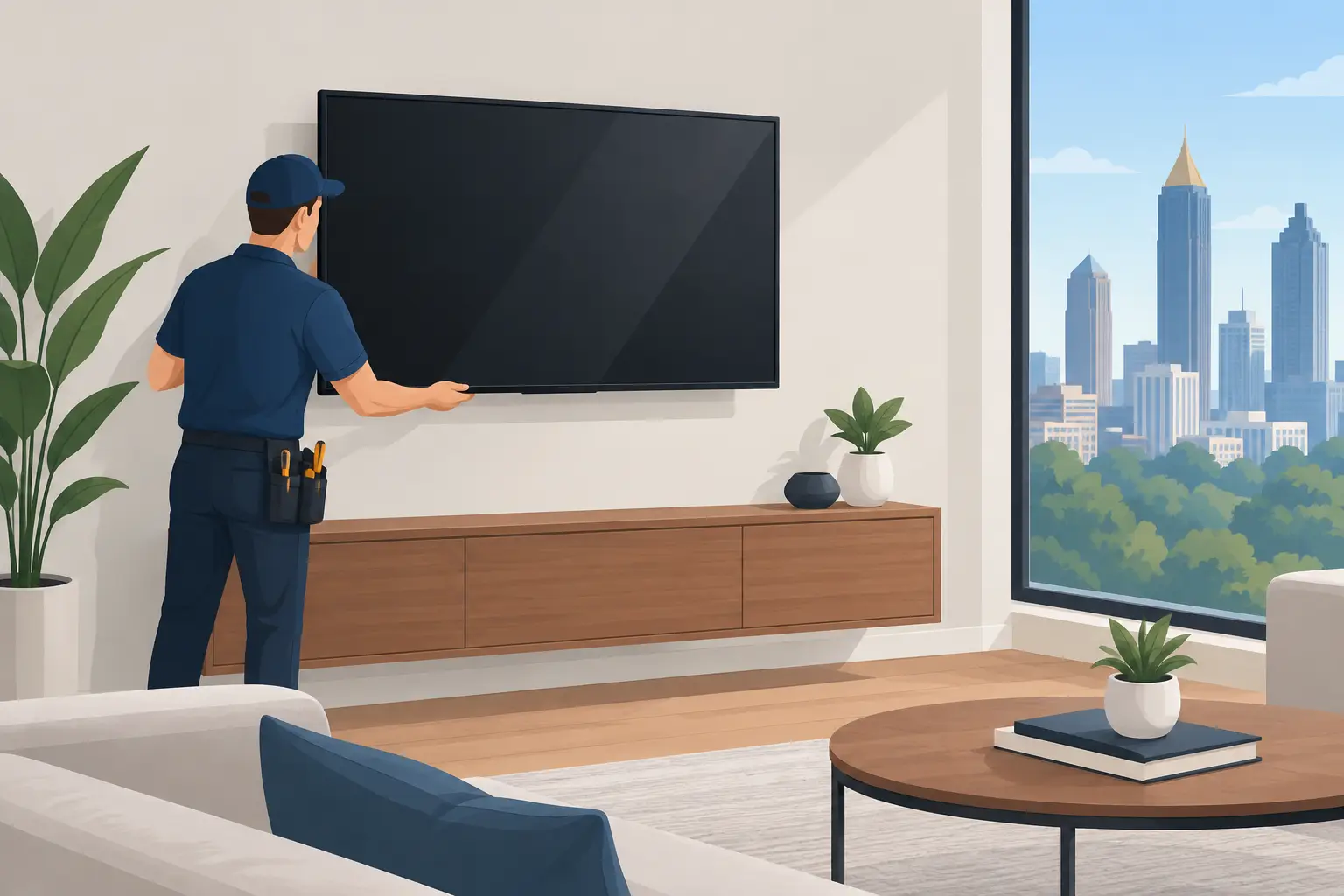
A new TV can make a room feel finished – until a loose power cord, visible HDMI cables, or an off-center screen turns the wall into a distraction. Professional TV mounting Atlanta homeowners rely on is about more than getting a bracket on the wall. It is about choosing the right location, securing the TV correctly, hiding what should stay hidden, and making sure every connected device works before the installer leaves.
For a family room, bedroom, media room, office, restaurant, or waiting area, the goal is the same: a screen that looks intentional and performs reliably. The details behind that result matter more than most people expect.
What Professional TV Mounting Atlanta Service Should Include
A finished installation starts with a site survey, even when the project seems straightforward. The wall type, TV size, seating position, nearby outlets, existing wiring, and connected equipment all affect the plan. A 55-inch TV over a console may need a very different approach than an 85-inch TV above a fireplace or a commercial display mounted in a lobby.
The mounting bracket must match the television’s size, weight, and VESA mounting pattern. It also needs to suit the way you use the room. A fixed mount creates a close-to-the-wall look and works well when the viewing position is directly in front of the screen. A tilt mount can reduce glare or improve the viewing angle when a TV sits higher than eye level. A full-motion mount gives more flexibility, but it requires proper support and careful cable management because the TV moves away from the wall.
Professional installation also means locating studs or using the correct mounting method for the specific wall construction. Drywall alone is not a secure mounting surface for a large television. Brick, stone, tile, plaster, metal studs, and walls over fireplaces each introduce their own considerations. The right answer depends on the wall and the equipment, not on a one-size-fits-all installation kit.
Once the mount is secure, the TV should be leveled, positioned carefully, and checked from the main seating area. A screen that is only slightly too high, too low, or too far to one side can bother you every day. Taking time to establish the correct height before drilling is part of doing the job right.
Hidden Wires Make the Installation Look Complete
The difference between a mounted TV and a finished entertainment wall is often cable concealment. Visible cords can make even an expensive television look temporary. A clean installation routes low-voltage wiring behind the wall when conditions allow, keeping HDMI, network, audio, and other signal cables out of sight.
Power requires special attention. A TV power cord should not simply be run inside a wall. Depending on the setup, a properly installed recessed outlet or approved power-relocation solution may be needed behind the TV. This creates the clean, flush look homeowners want while keeping the installation safe and code-conscious.
Cable planning matters even if you are only connecting a streaming device today. Think ahead before the wall is closed up. You may later add a soundbar, game console, cable box, Apple TV, Blu-ray player, wired network connection, or outdoor antenna. Installing the right in-wall-rated cables and pathways now can prevent another round of wall work later.
For many homeowners, a single HDMI cable and power connection are enough. For a media room with several sources, the better choice may be routing cables to a cabinet, equipment rack, or nearby closet. The cleanest solution is not always the one with the fewest cables. It is the one that keeps equipment accessible, organized, and easy to service.
The Best TV Location Depends on How You Watch
There is no universal mounting height that works in every Atlanta home. The right placement depends on the TV size, sofa height, room layout, and viewing habits. In most living rooms, the center of the screen should be close to seated eye level. When a TV is mounted above a fireplace, it will naturally sit higher, so a tilt mount can help direct the screen toward viewers and reduce neck strain.
Above-fireplace installations deserve a closer look before work begins. Heat, mantel depth, chimney construction, stone or tile surfaces, and the location of electrical components can all affect what is possible. Some fireplaces are excellent TV locations. Others create poor viewing angles or expose the TV to more heat than the manufacturer recommends. A technician should evaluate the actual conditions rather than assume every fireplace wall can be treated the same way.
Glare is another reason location matters. Atlanta’s bright afternoons can create reflections from windows, glass doors, and overhead lighting. Before choosing a wall, consider when the room gets the most sun and where people usually sit. A full-motion mount can help in some rooms, but moving the TV to a better wall may be the smarter long-term choice.
Soundbars, Speakers, and Smart Devices Need a Plan
A wall-mounted TV is often the first step in a larger entertainment upgrade. A soundbar can improve dialogue clarity and create a more balanced movie or sports experience without filling the room with equipment. It can be mounted beneath the TV, placed on furniture below it, or integrated with a surround-sound system depending on the room and the homeowner’s goals.
The setup should account for HDMI ARC or eARC compatibility, optical connections, wireless pairing, remote control behavior, and the location of streaming devices. These details are where many do-it-yourself installations become frustrating. The picture may appear, but the sound does not switch correctly, the remote controls only part of the system, or a device loses its network connection.
For a more immersive room, in-wall or in-ceiling speakers can provide a cleaner appearance than freestanding equipment. Surround sound requires thoughtful speaker placement, calibration, and cable routing. It is not just about adding more speakers. Properly placed front, center, surround, and subwoofer channels make dialogue easier to understand and effects feel natural rather than overpowering.
Smart-home devices can also be part of the same visit. A connected TV, Wi-Fi speaker, Ring doorbell, Google Nest device, or universal control setup should be configured with the home network in mind. Strong Wi-Fi, correct account setup, and a quick orientation for the homeowner can make the difference between technology that feels convenient and technology that feels like another chore.
Why Experience Matters With Large and Premium TVs
Modern televisions are thinner, larger, and more delicate than older models. An 85-inch screen may be surprisingly slim, but it is not simple to lift, align, and secure. Large-format TVs often require two trained technicians, appropriate lifting practices, and a mount rated for the load.
Premium TVs also make small installation mistakes more noticeable. A crooked screen, a mount that sits too far from the wall, exposed cables, or a poorly positioned soundbar can take away from the look you paid for. A professional team protects the TV, the wall, and the surrounding furniture while completing the work cleanly.
Atlanta TV Install approaches the job as a complete service, from equipment delivery and wall mounting to cable concealment, sound setup, programming, cleanup, and a final walkthrough. That owner-led, local accountability matters when you want answers before the appointment and support after the installation.
Questions to Ask Before Scheduling
Before booking TV mounting, have a clear idea of the television model, wall location, and devices you want connected. If you are still deciding, that is fine – it simply gives the installer a chance to recommend the right mount, cable plan, and placement before installation day.
Ask whether the quoted service includes mounting hardware, in-wall cable concealment, outlet relocation, soundbar mounting, device connections, programming, and cleanup. These items are often treated as separate services, so clear package pricing helps prevent surprises. Also ask about warranty coverage and what happens if the wall presents an unexpected condition once work begins.
If you are renovating, schedule TV and audio planning before painters finish or before drywall is closed. That timing makes it easier to run cables, add outlets, install backing, and prepare for speakers or a projector. If the room is already complete, a skilled installer can still create a polished result with minimal disruption.
A properly mounted TV should disappear into the room in the best possible way. The screen is where it belongs, the wires are out of view, the sound works, and every remote does what it should. Set up an appointment with a local installation team that treats those finishing details as part of the job, not as extras.